No government insurance, 3% down, and PMI that actually goes away. Here's who conventional is for and how to find out if it's you.
Somewhere along the way you heard you need 20% down for a conventional loan, and you've been quietly counting yourself out ever since. That belief is common and it's wrong. Conventional down payments start at 3% for first-time buyers. Twenty percent is a thing you can do, not a thing you must do, and the gap between those two is where a lot of people talk themselves out of a house they could already buy.
The other quiet fear is credit. You think yours isn't good enough and you don't want to ask and find out. Fair. Let's just look.
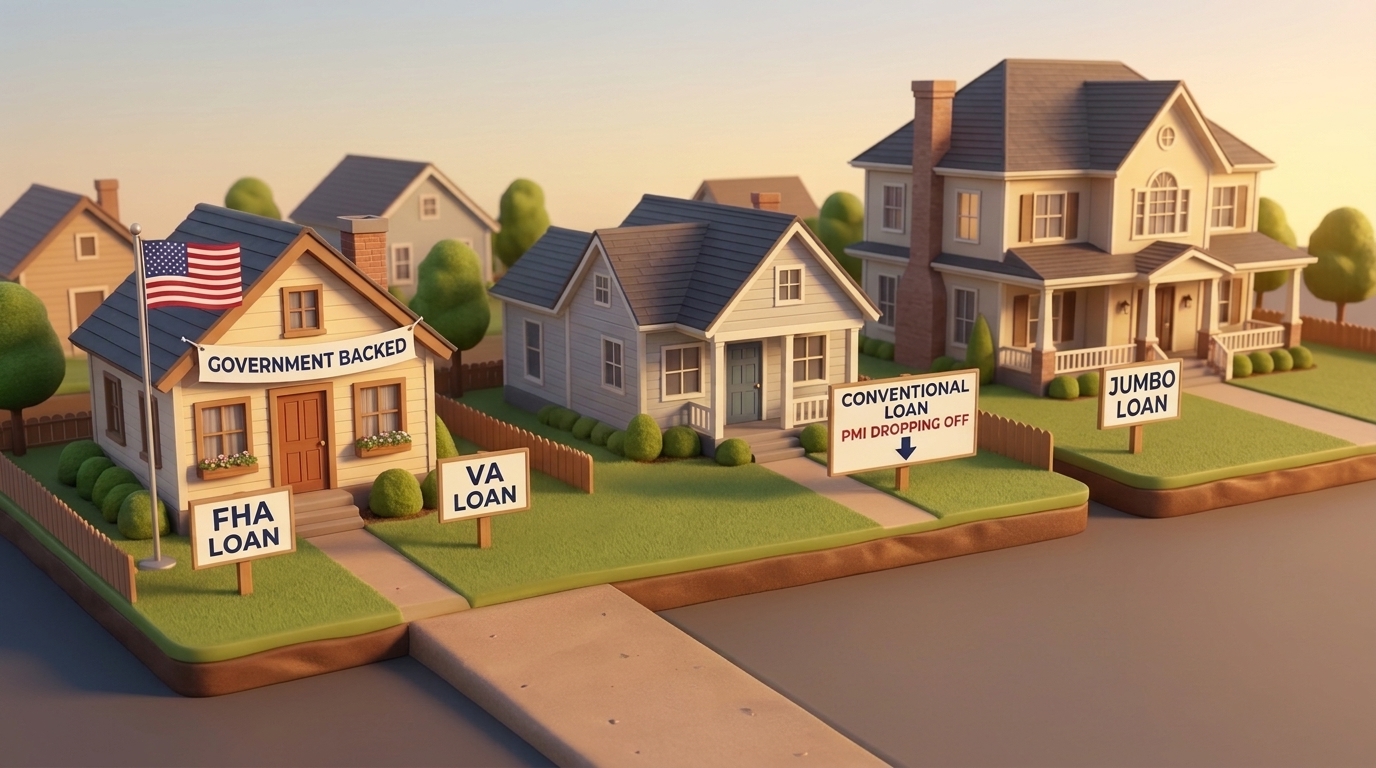
Conventional means there's no government agency insuring the loan behind the scenes, the way FHA or VA does. That matters less than it sounds, and in one way it works in your favor.
Here are the moving parts, honestly:
I won't quote you a rate or a payment here, because an honest one needs your actual numbers, not a guess. General guidance is what an article can give. Your number needs your file.
The reason to look now is simple: nothing about your credit or your down payment improves while you avoid looking at it. Looking isn't a repair bill. It's lifting the hood to see what the engine's actually doing. You can look today and decide nothing.
If conventional isn't your best fit, I'll tell you that plainly and point you at the one that is. Not ready to apply? A conversation is on the table too. But the file is what turns a guess into an answer.
Educational content only — not a loan offer, rate quote, or commitment to lend. Program guidelines are general; your actual options depend on your full financial picture. Nic Feinstein, NMLS# 2830139, RanLife Home Loans (Corporate NMLS# 3151). Equal Housing Lender.